AP Lit Students Attend a Reading and Discussion with Junot Diaz

Junot Diaz is one of the most famous and influential writers working today.  His first novel, The Brief Wondrous Life of Oscar Wao won a Pulitzer Prize and is on the 12th grade Advanced Placement Literature syllabus here at CHAH.  It tells a multigenerational story of a Dominican-American family, blending the lines between history and fiction.  The novel, like the other books by Diaz, deals with themes of family, culture, diaspora, love, and what it's like to not always fit in.   
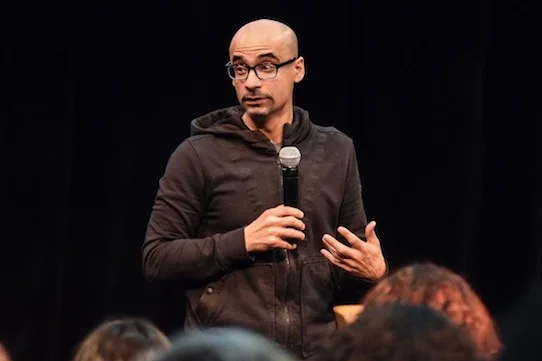
This week, the AP Literature students got to meet Junot Diaz at a reading at St. Francis College in downtown Brooklyn.  The students heard him read from his collection of short stories, Drown, and listened to his incredibly candid responses during the question-and-answer discussion.  Junot Diaz encouraged the audience to "read more rebelliously" and find books that they enjoyed and that related to their own lives. 

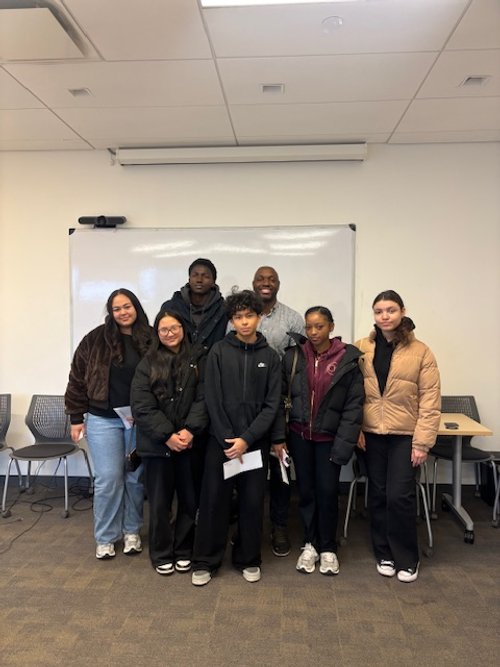
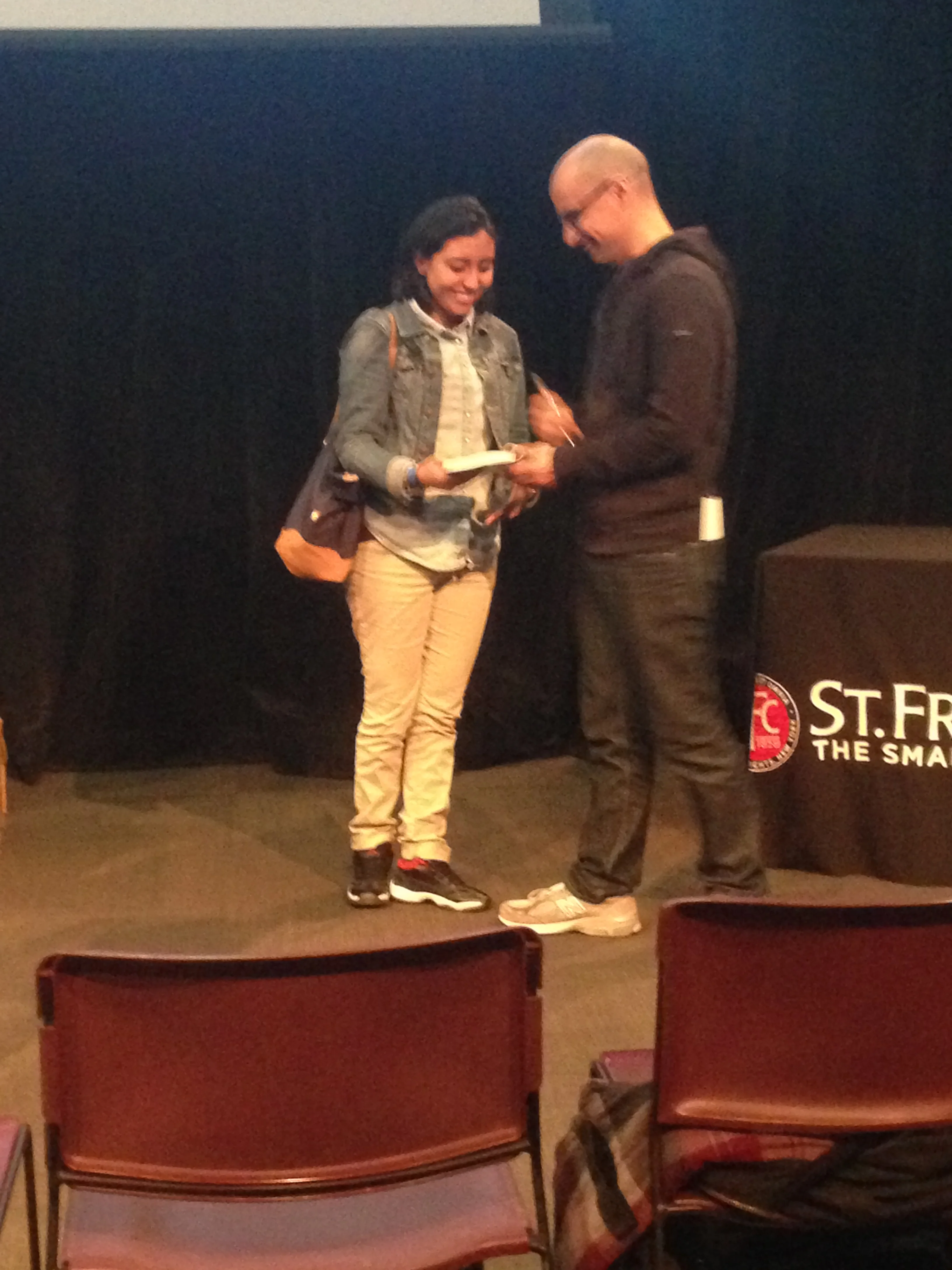
After the discussion, Diaz signed books and posed for photos with his readers and fans. 
"I connected a lot of the things he said to what we've been talking about in AP Lit," Zaria said.

"He wasn't like I thought he'd be," Alexis noticed.  "He was cool.  It was chill."

"I still would have gone, even if I didn't get the extra credit," said Jeffrey.  "I will attend more things like this in the future."

An article by Samantha Samel in the Brooklyn Daily Eagle describes the content of Diaz's talk in much more detail here: SAMEL ARTICLE

Oh, and 2 teachers, Ms. Korn and Mr. Dickhudt, giddily got their photo taken with Junot Diaz as well.
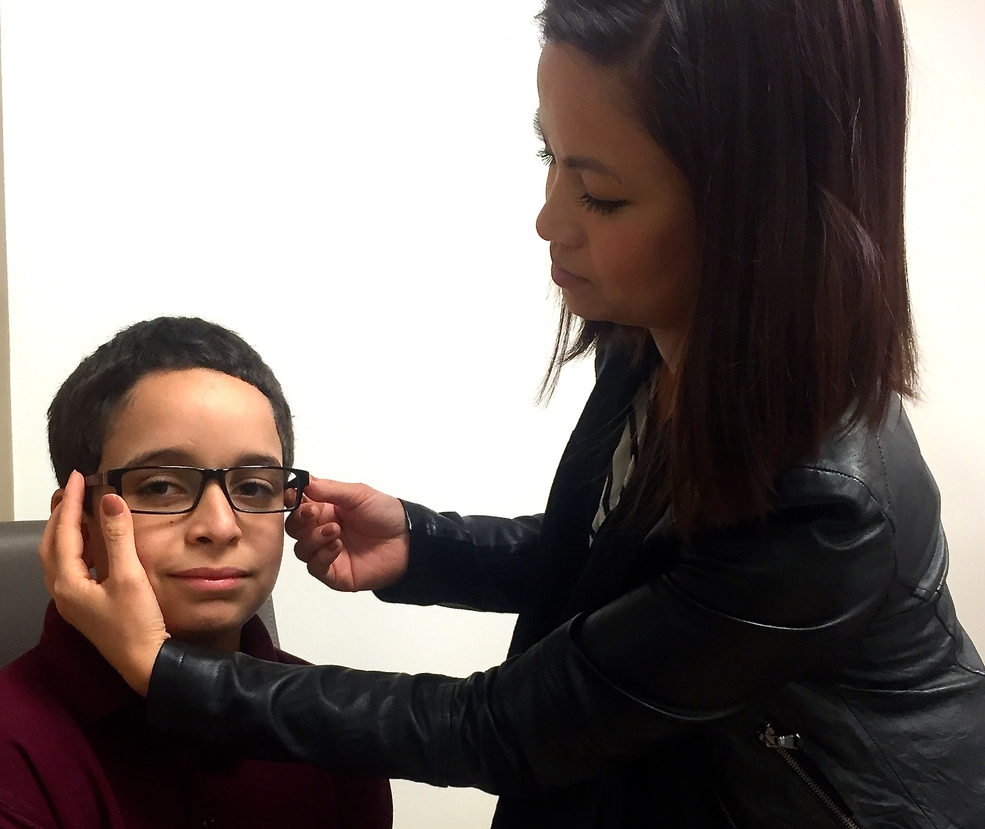
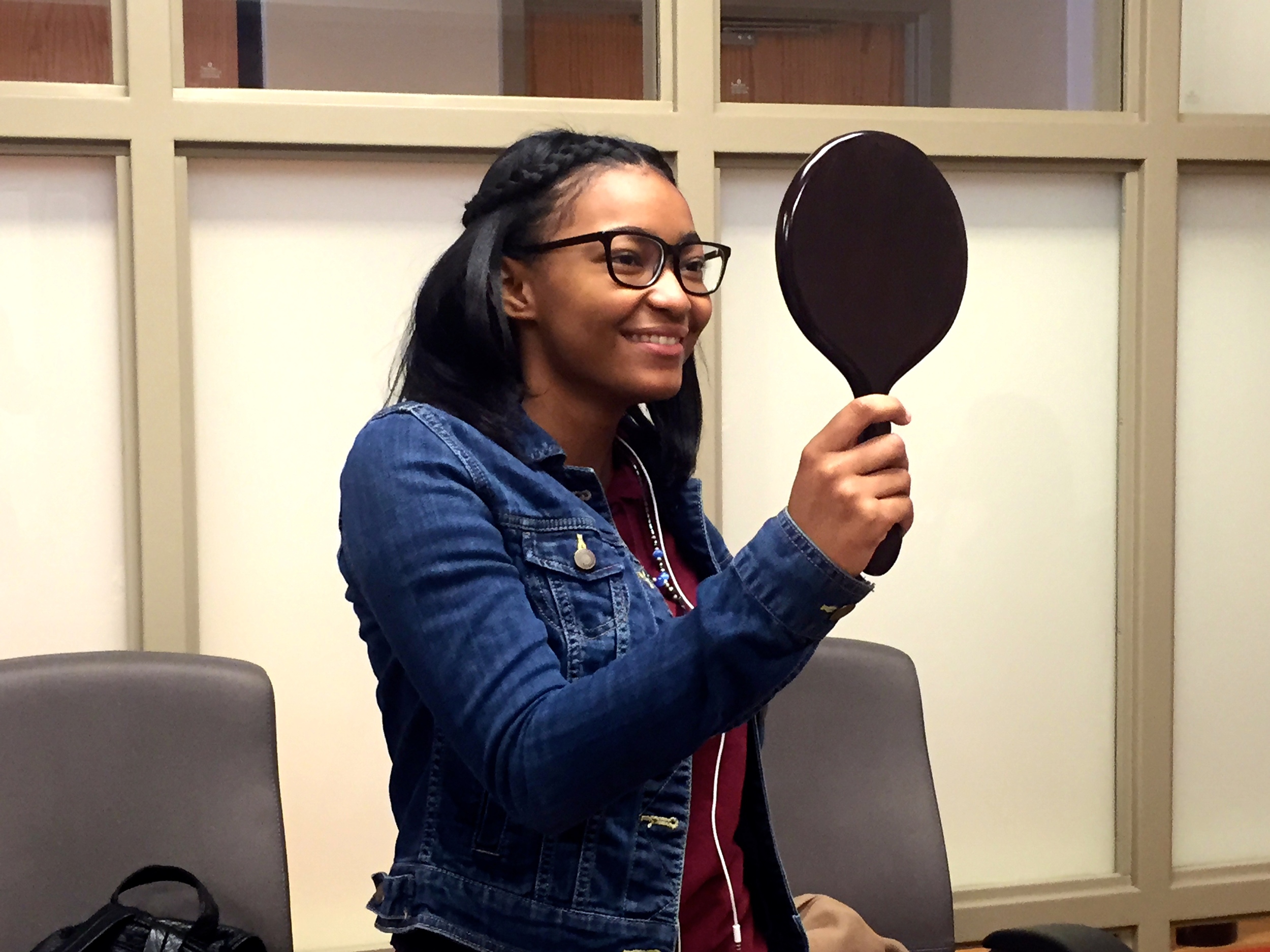
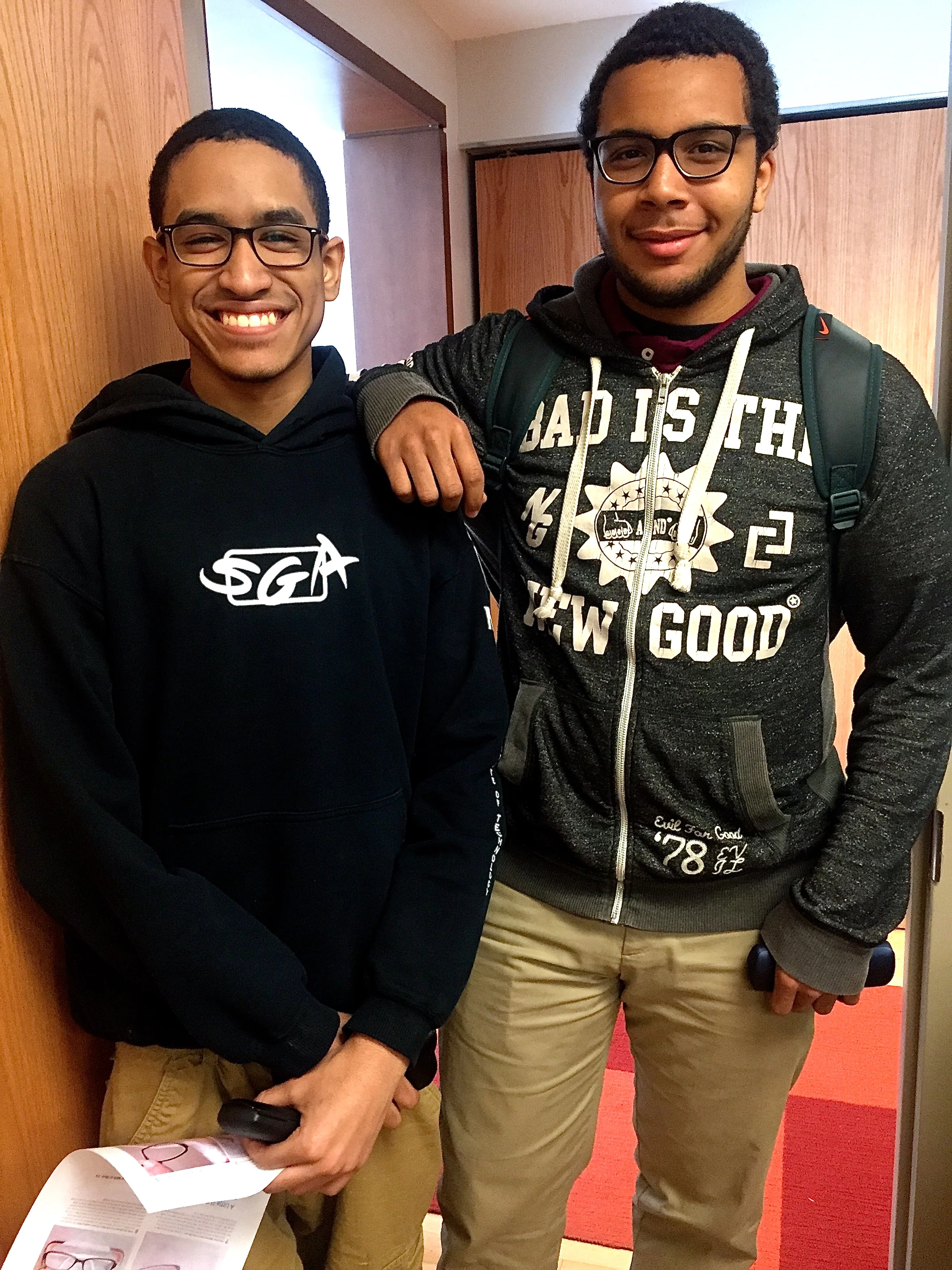
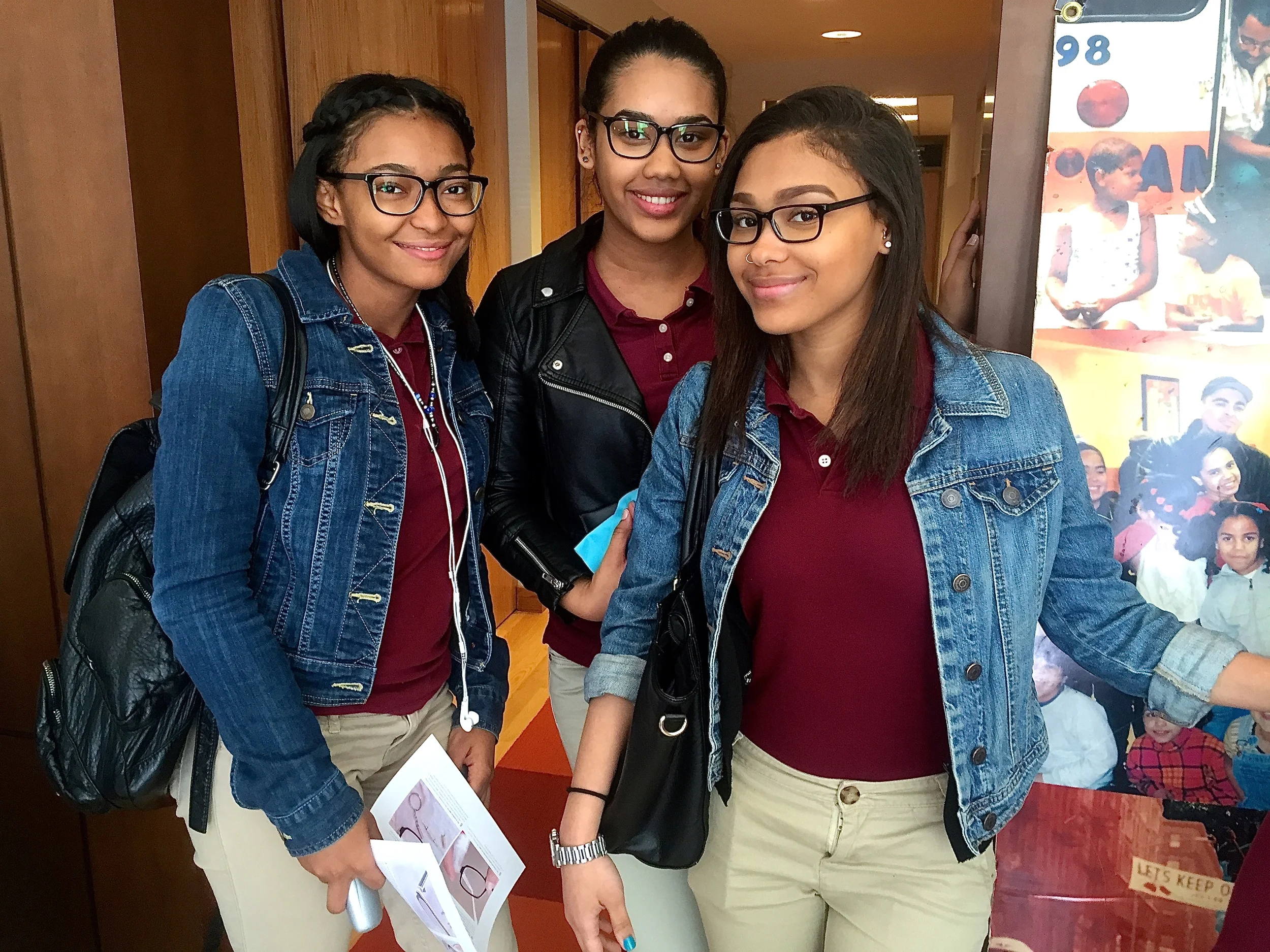
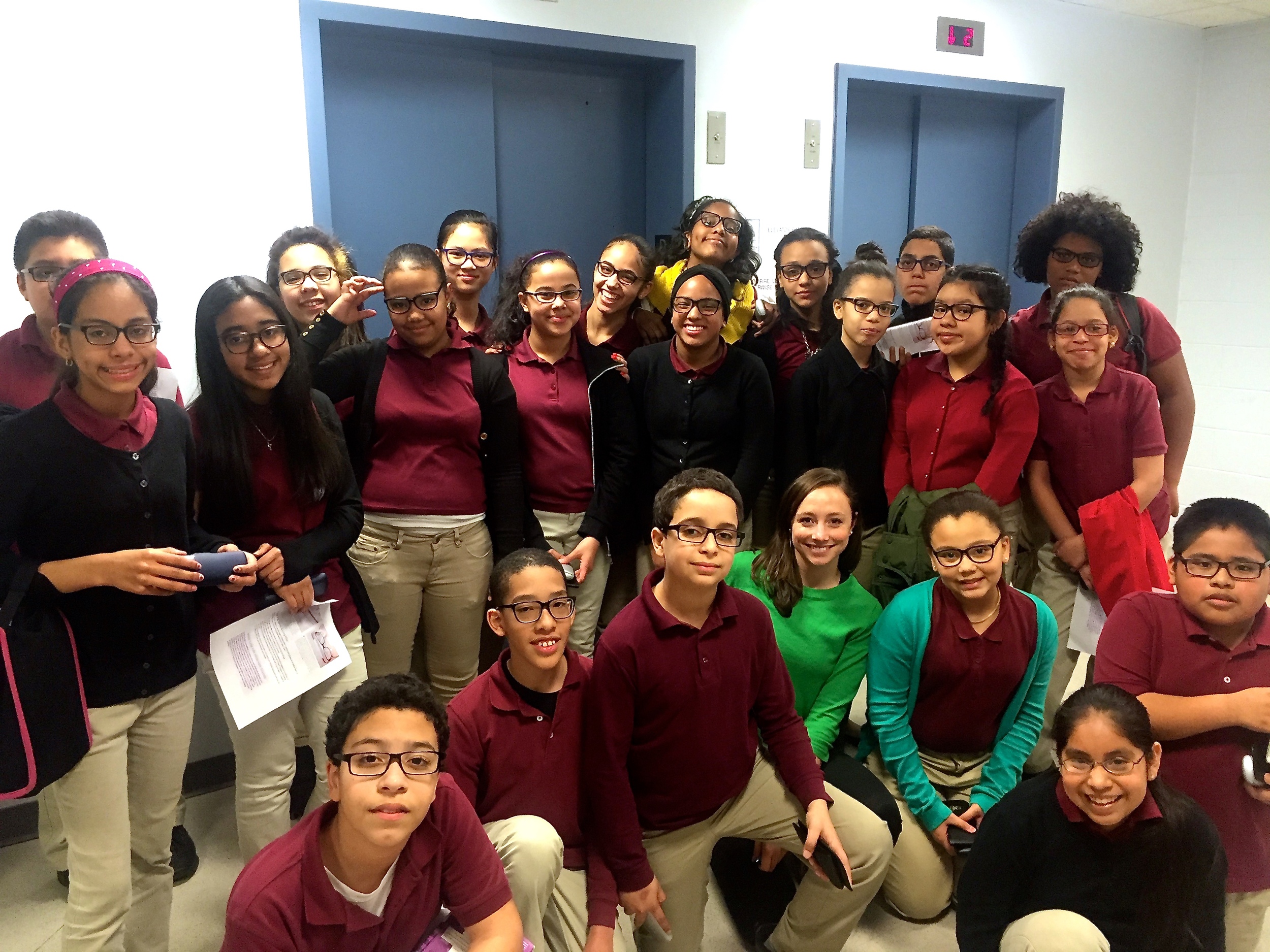
Designer Glasses for CHAH Students...for FREE!

About a month ago, many of our students were tested for vision impairments.  If a student was found to have worse than 20/40 vision, a free prescription for glasses was written.  This week, those prescriptions were filled by a NYC-based designer eyewear company and the students were fitted for their free pair of prescription classes.

Research has shown that if students have vision impairments, their reading comprehension suffers.  If a student can’t see the words on the page clearly, they will certainly have trouble reading and comprehending them. 

Getting these free glasses is a simple and concrete step to improving students' reading.

 Hopefully, they'll be more confident readers in the classroom, on tests, and in their everyday lives.  

Glasses won’t only make our students look smart – they might even improve their grades! 


Hispanic Students' Dental Association at Columbia University Medical Center

The Hispanic Students' Dental Association from Columbia University Medical Center made a visit to CHAH's 6th graders on Tuesday, March 10th.


Our students learned about dental hygiene, how to brush and floss correctly, and how often to visit your dentist. Students received goodie bags and healthy snacks, but that’s nothing compared to the pearly smiles they’ll have for the rest of their lives!

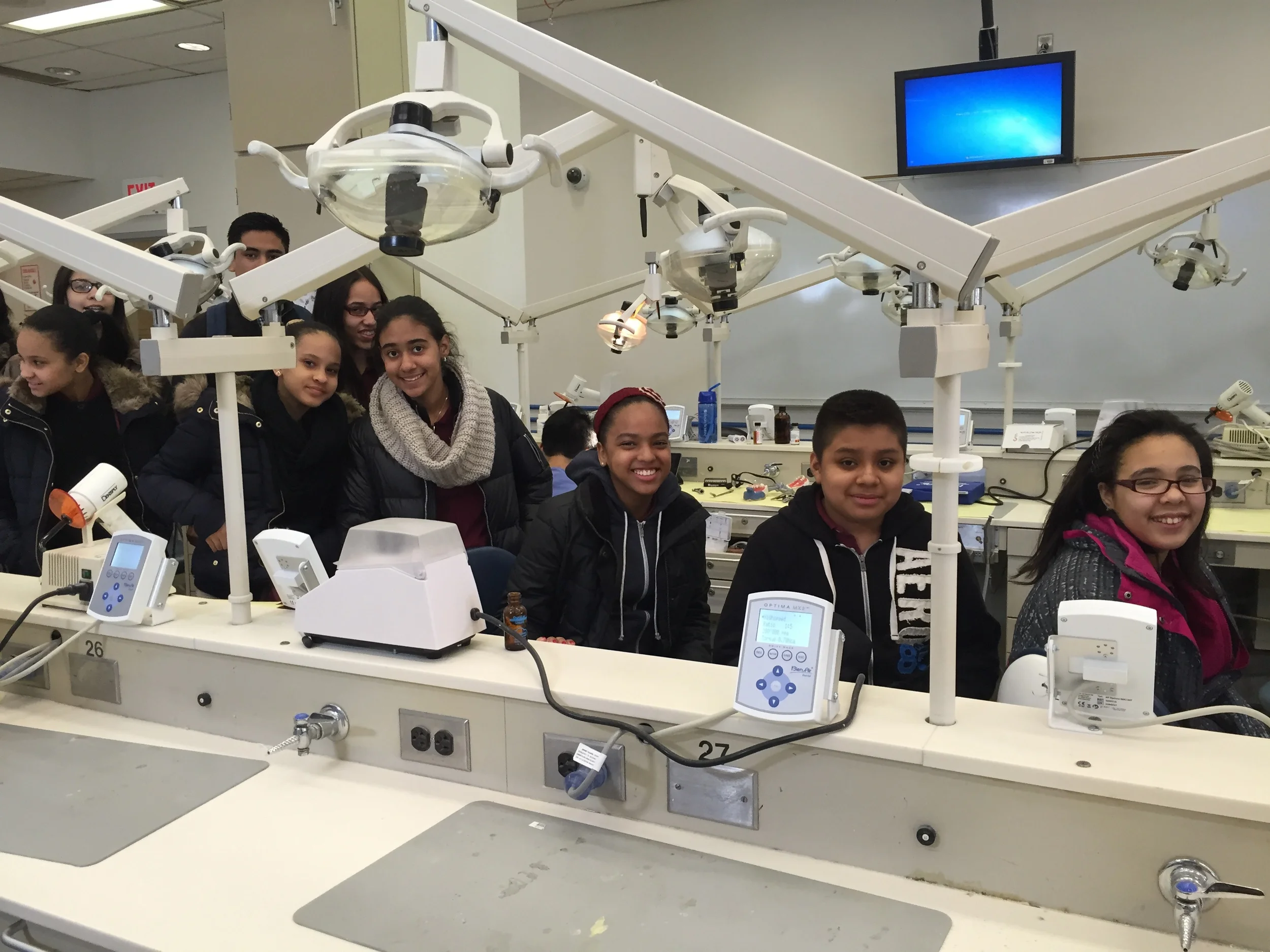
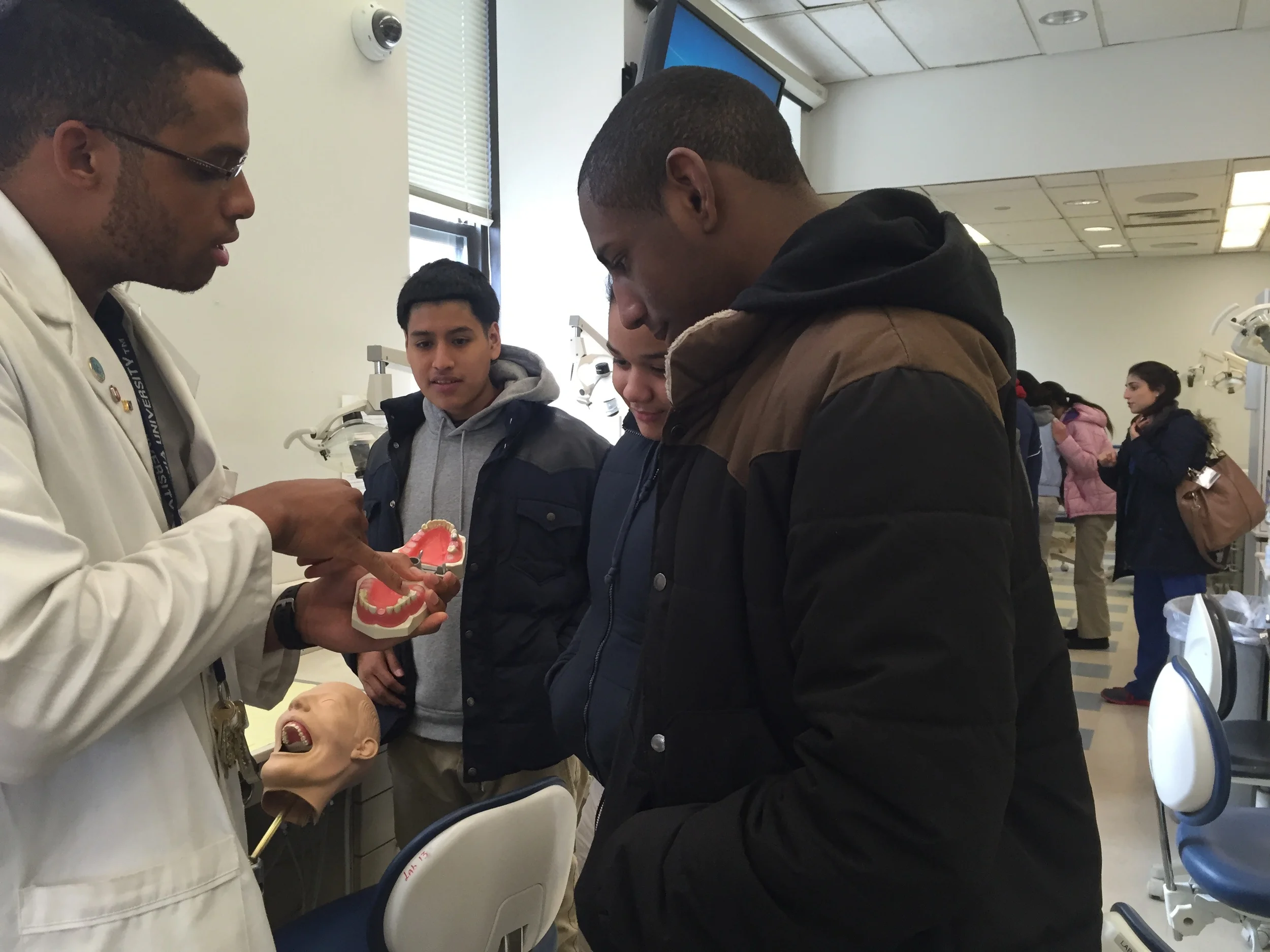
Then, on Wednesday, April 1 the students visited the dentists-to-be at their school at the College of Dental Medicine at Columbia University Medical Center.


The Hispanic Students' Dental Association invited the students to tour the dental school and share in a lunch.


The highlight of the trip was seeing the pre-clinic labs, where dental students practice their dental procedures with real tools on dummies with fake teeth.  Maybe someday one of our students will be cleaning your teeth in their own dental office!

Dissecting Fetal Pigs

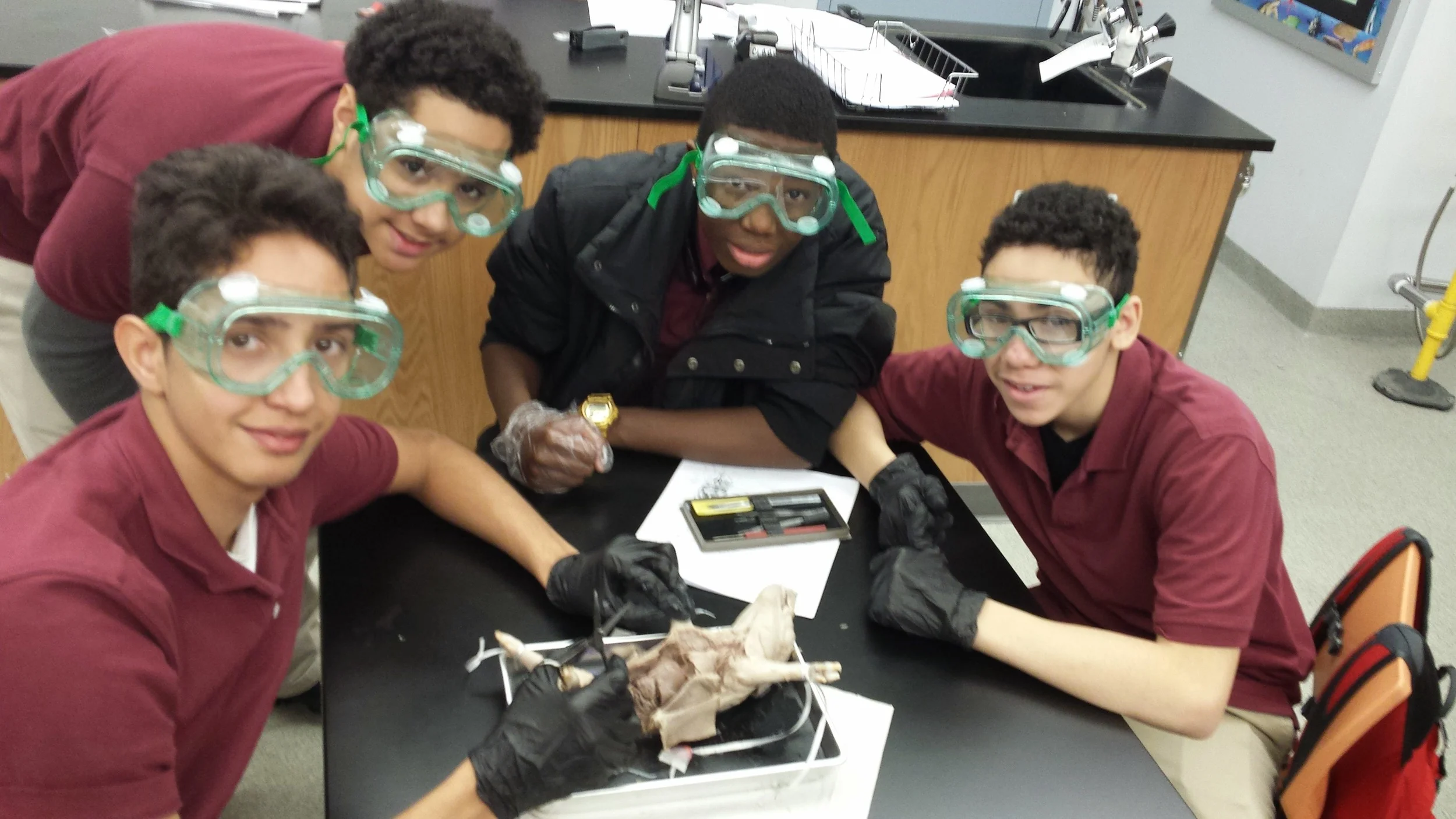
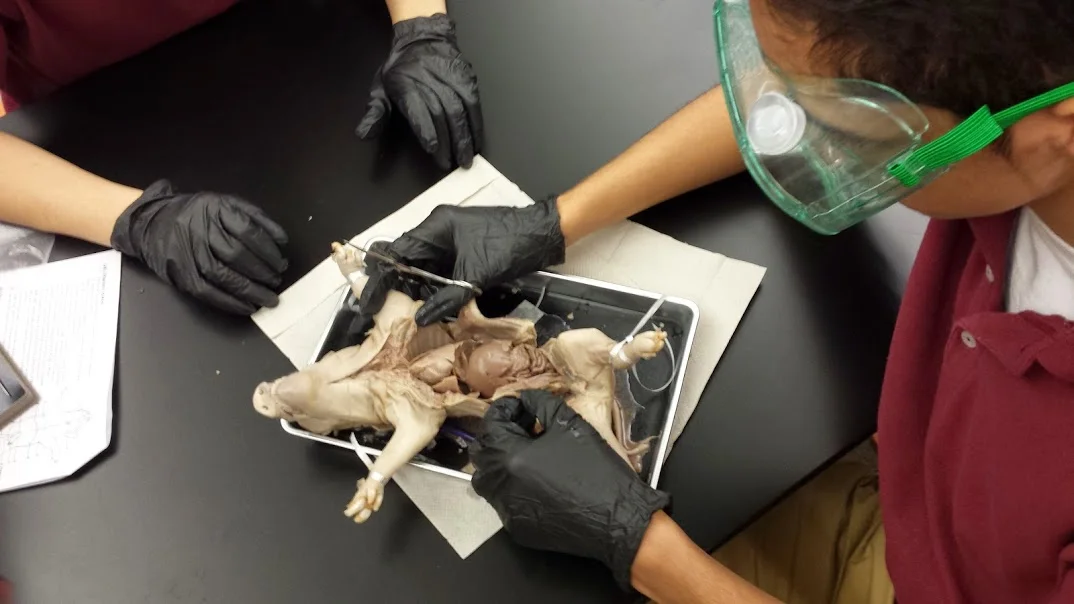
The fetal pigs smell funny, feel slimy, and look disgusting, but the 9th graders in Ms. Clark’s biology class can’t get enough!

“I was scared to touch it the first day, but the second day I did, and it really wasn’t that bad,” Shalem said.

“I feel like a doctor!” Elian added. 

One of the main goals of any biology class is to understand how animal’s bodies function.  Having a clear picture of the interconnectedness of internal organs, the layers of flesh, and the vital, life-giving flow of blood can be helpful.  But being able to see the real thing really puts it all in the proper perspective.

According to Ms. Clark, “We do dissections to learn about living things, but also to appreciate life. I can show my students pictures and videos- but nothing beats seeing, touching and learning from the real thing. Also, dissecting the pigs teaches students about their own bodies, because our organ systems are very similar”

When asked if there were any students who were afraid to participate, or got queasy during the experiment, she added, “If a student is nervous, I instructed them to sit back and observe the first day. By the second day of dissections usually the nervousness wears off and curiosity sets it. After that, it just feels like another lab - really cool lab!”